Are there AI chatbots that can handle customer inquiries 24/7?
Always Ready to Assist: AI Chatbots Enriching Customer Support.
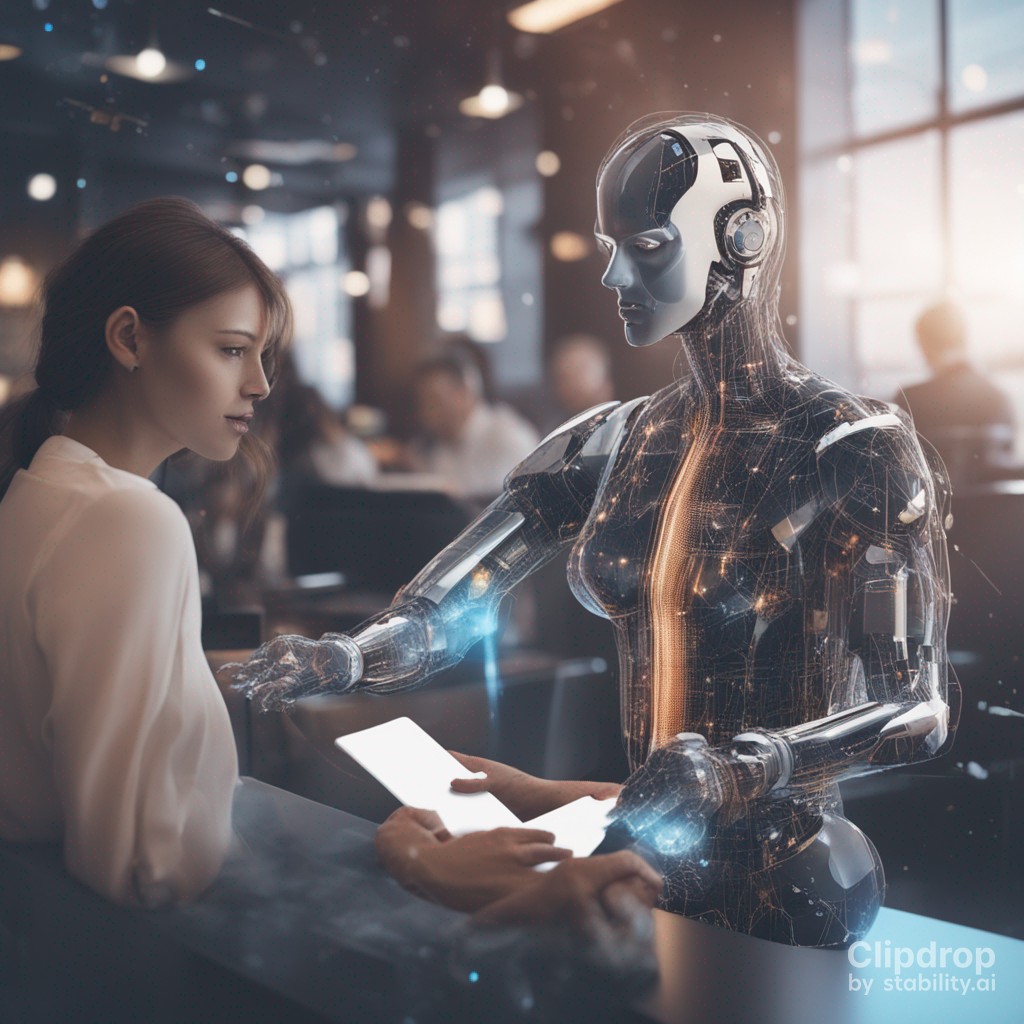 Created with Clipdrop by Stability.ai
24/7 Customer Engagement: The Power of AI Chatbots in Handling Customer Inquiries
In the modern business landscape, customer engagement is no longer confined to traditional office hours. Customers expect instant responses and assistance around the clock, which can be a challenge for businesses to meet using traditional means. This is where Artificial Intelligence (AI) chatbots come into play. These intelligent virtual assistants have the capability to handle customer inquiries 24/7, providing immediate responses, enhancing customer satisfaction, and streamlining business operations. In this article, we'll explore the world of AI chatbots that operate around the clock, diving into their benefits, functionalities, challenges, and real-world applications.
The Evolution of Customer Engagement
The digital era has reshaped the way businesses and customers interact. With the rise of e-commerce, online services, and social media, customers have come to expect rapid responses and personalized assistance at any time, day or night. Meeting these expectations can be challenging for human agents, who have limitations in terms of availability, speed, and consistency. This is where AI chatbots step in to bridge the gap.
The Role of AI Chatbots in 24/7 Customer Engagement
AI chatbots are intelligent software programs that use natural language processing (NLP) and machine learning to simulate human conversations. They provide businesses with the ability to engage with customers in real time, addressing their queries, providing information, and even executing certain tasks without the limitations of human availability.
Benefits of AI Chatbots for 24/7 Customer Engagement
Instant Responses: AI chatbots provide immediate responses to customer inquiries, reducing waiting times and frustration.
24/7 Availability: AI chatbots operate round the clock, ensuring that customers can receive assistance at any time, regardless of time zones or holidays.
Consistency: AI chatbots provide consistent responses, ensuring that customers receive accurate information every time they engage.
Scalability: AI chatbots can handle multiple conversations simultaneously, scaling to accommodate high volumes of inquiries.
Cost Efficiency: Implementing AI chatbots can lead to cost savings compared to hiring and training a large team of human agents.
Data Insights: AI chatbots can gather valuable data about customer preferences, pain points, and frequently asked questions, which can inform business strategies.
AI Chatbot Functionalities for 24/7 Support
Answering FAQs: AI chatbots can handle routine questions by providing predefined responses based on a database of frequently asked questions.
Information Retrieval: AI chatbots can retrieve specific information, such as order status or product details, from databases and present it to customers.
Task Automation: AI chatbots can perform tasks such as appointment scheduling, order placement, and reservation bookings.
Personalization: AI chatbots can tailor responses based on user profiles, purchase history, and preferences, creating a more personalized experience.
Escalation to Human Agents: When a query is beyond the capabilities of the chatbot, it can escalate the conversation to a human agent for further assistance.
Real-World Applications
E-commerce: AI chatbots can help customers browse products, check availability, and make purchases at any time of day.
Customer Support: AI chatbots provide immediate solutions for common technical issues, reducing the need for customers to wait for human agents.
Hospitality: Hotels and travel services use AI chatbots to assist with room bookings, travel arrangements, and concierge services.
Banking: AI chatbots handle account inquiries, transaction history, and help customers with basic banking tasks.
Healthcare: Healthcare providers use AI chatbots to provide medical information, schedule appointments, and offer medication reminders.
Challenges and Considerations
While AI chatbots offer significant advantages in 24/7 customer engagement, there are challenges to consider:
Limited Contextual Understanding: AI chatbots might struggle with understanding complex or nuanced queries that require contextual understanding.
Language Variability: Different languages, dialects, and regional nuances can pose challenges for AI chatbots in accurately interpreting user inputs.
Data Privacy: Handling sensitive customer data requires robust security measures to ensure privacy and compliance with regulations.
Initial Investment: Implementing AI chatbots requires an upfront investment in technology, training, and integration with existing systems.
Continuous Learning: AI chatbots need to be continuously updated and trained to stay relevant and accurate in their responses.
The Future of AI Chatbots
As AI technology continues to evolve, the future of AI chatbots holds exciting possibilities:
Emotion Detection: AI chatbots might evolve to detect and respond to user emotions, enabling more empathetic interactions.
Multimodal Interaction: AI chatbots could incorporate voice, visuals, and text to offer more comprehensive and natural interactions.
Interconnectivity: AI chatbots might seamlessly integrate with other AI-driven systems and devices, providing a unified user experience.
Conclusion: Enhancing Customer Engagement with AI Chatbots
AI chatbots have become an indispensable tool for businesses seeking to provide exceptional customer service around the clock. By combining the power of AI, NLP, and automation, these chatbots offer instant responses, consistent interactions, and personalized experiences that cater to customer needs at any time. While challenges exist, businesses that successfully integrate AI chatbots into their customer engagement strategies can gain a competitive edge by delivering efficient and effective support that meets the demands of today's always-on digital
environment.